
The Trusted Economy Forum is a series of events, webinars, projects and an expert community to promote among European Union’s digital market participants:
- secure remote identification tools (such as digital identity wallets),
- trust services (such as electronic signatures and e-Delivery).
The Trusted Economy Forum was originally a conference organized from 2020 to 2023 by Asseco Data System. Previously, the event was called the European Electronic Signature Forum and had 19 editions – including events which took place in Międzyzdroje, Szczecin and Warsaw in Poland. Now is a brand connected with Obserwatorium.biz. On the previos edition we talked about: European Identity Wallets and business fundamentals of the Trust Services market.
What made Trusted Economy Forum 2025 edition truly special?
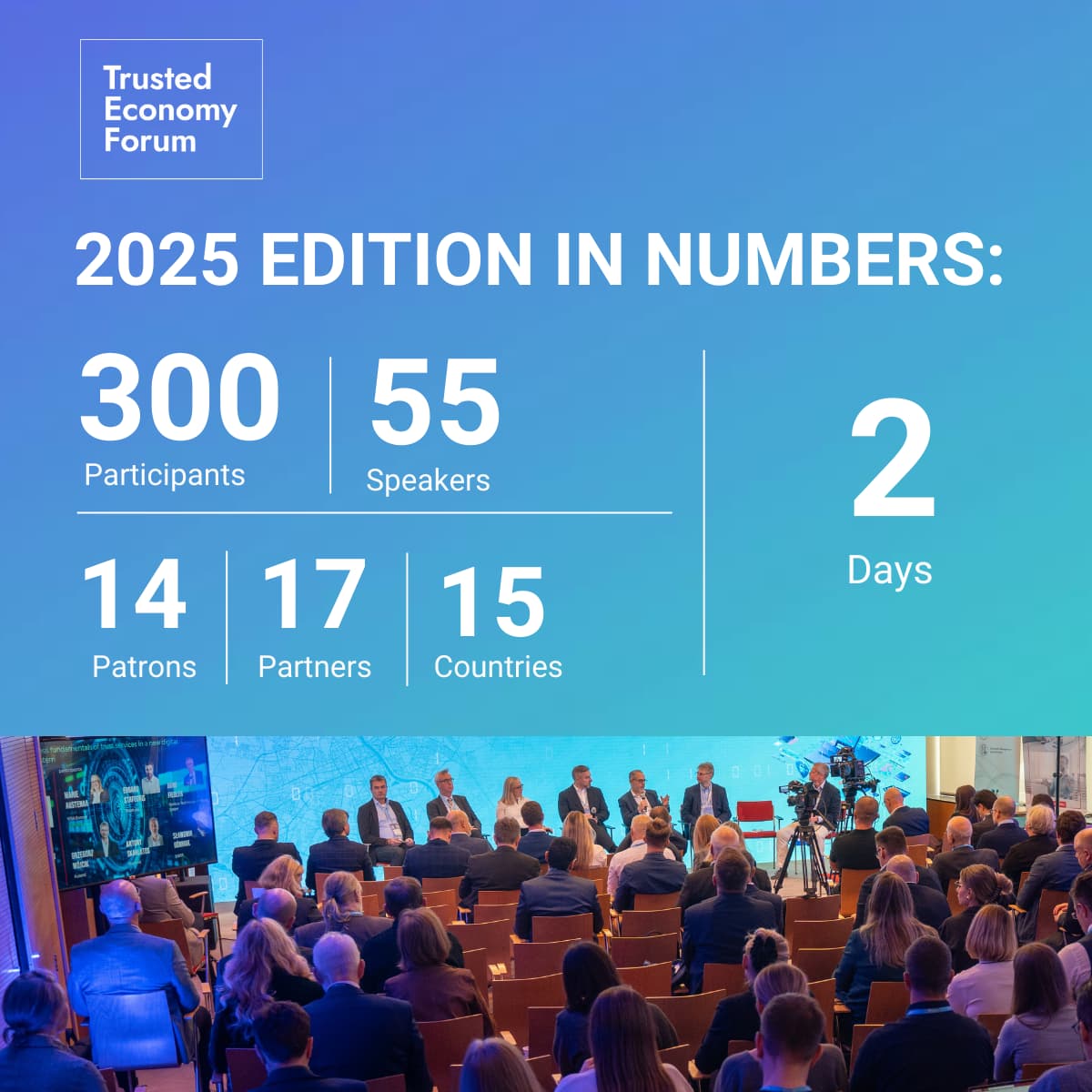
It was two days of insights, inspiration, and innovation in digital trust! The Trusted Economy Forum 2025 edition has officially concluded, marking a record-breaking edition in every sense. With nearly:
- 300 participants,
- 55 speakers representing 15 countries,
- 17 partners,
- 14 patrons
the event showcased the dynamic evolution of digital identity, trust services, and e-signature adoption across Europe and beyond. Over two intensive days of bilingual sessions (Polish–English), attendees from public administration, financial services, HR, and technology sectors exchanged ideas, explored practical solutions, and examined emerging trends shaping the future of digital trust and transformation.
Conference Highlights:
- Digital Transformation with Trust Awards – 2025 Gala.
For the first time, the conference hosted a gala recognizing organizations that successfully implement trust services. Grupa Grupa EFL (Europejski Fundusz Leasingowy SA) was awarded the title of Digital Transformation Leader 2025 for its one-time qualified electronic signature project in leasing processes. Honourable mentions went to ING Lease (Polska), ORLEN S.A. and PZU. The jury, including Elżbieta Andrukiewicz, Kajetan Wojsyk, Dariusz Szostek and Jacek Siemiończyk, evaluated submissions based on innovation, business impact, security, technical compliance, end-user experience, and market influence. - Dynamic panels and fireside chats.
Participants engaged in discussions covering digital wallets, electronic identity frameworks, HR digitization, e-Delivery, electronic signatures in finance, and the European Digital Identity Wallet under eIDAS 2.0. Sessions included case studies, practical recommendations, and cross-border insights, providing attendees with actionable takeaways.
- Global perspectives.
Experts from Armenia, Estonia, Germany, Italy, Japan, Norway, Slovakia, Ukraine, UK and more shared their experiences, offering a broad understanding of international practices in trust services, digital identity adoption, and regulatory compliance.
- Report premiere.
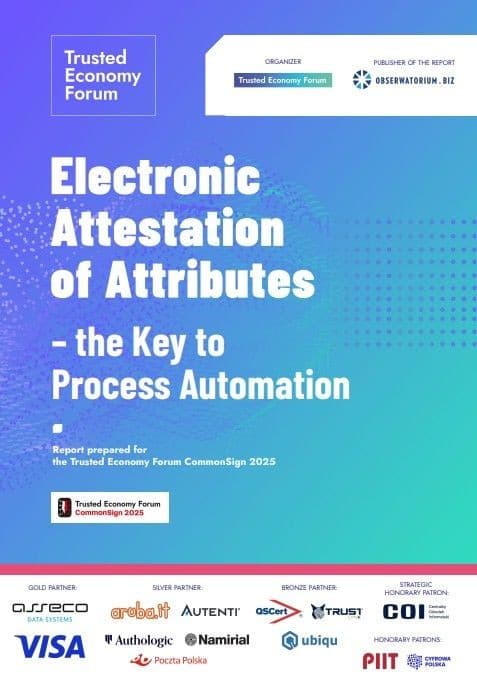
The conference also marked the launch of the Obserwatorium.biz report, “Electronic Attestations of Attributes – a key to process automation”. The report highlights how electronic attributes and attestations enable secure, automated, and efficient service delivery. It provides guidance for organizations seeking to integrate trust services and e-credentials in both public and private sector operations.
The report is available for download:
PL: Download the Polish version of the report
EN: Download the English version of the report
Networking and Knowledge Exchange
The forum’s design fostered meaningful cross-sector and international networking, allowing participants to exchange experiences and forge collaborations for future projects. From public-private partnerships in digital ecosystems to discussions on innovative HR solutions and finance digitization, attendees left with insights they could immediately apply in their organizations.
Reflecting on the event, many attendees highlighted the practical and actionable focus of Trusted Economy Forum CommonSign 2025 as its greatest value. The conference demonstrated that digital trust is not merely a concept but a strategic driver for operational efficiency, market innovation, and secure service delivery.
Why This Edition Stood Out?
- Record-breaking participation and diversity of speakers, bringing fresh perspectives and new voices to the stage.
- Inaugural awards ceremony, recognizing leadership in digital transformation and trust services.
- Actionable insights into policy, technology adoption, and international trends in digital identity and trust frameworks.
- Bilingual format, enabling knowledge sharing across borders and fostering collaboration between practitioners in Europe and Asia.
The Trusted Economy Forum edition 2025 offered participants a comprehensive look at the latest developments in eIDAS 2.0 compliance, electronic attestations, and digital wallets – providing both inspiration and a practical roadmap for integrating trust services into everyday business operations.
Key conclusions for EUDI stakeholders
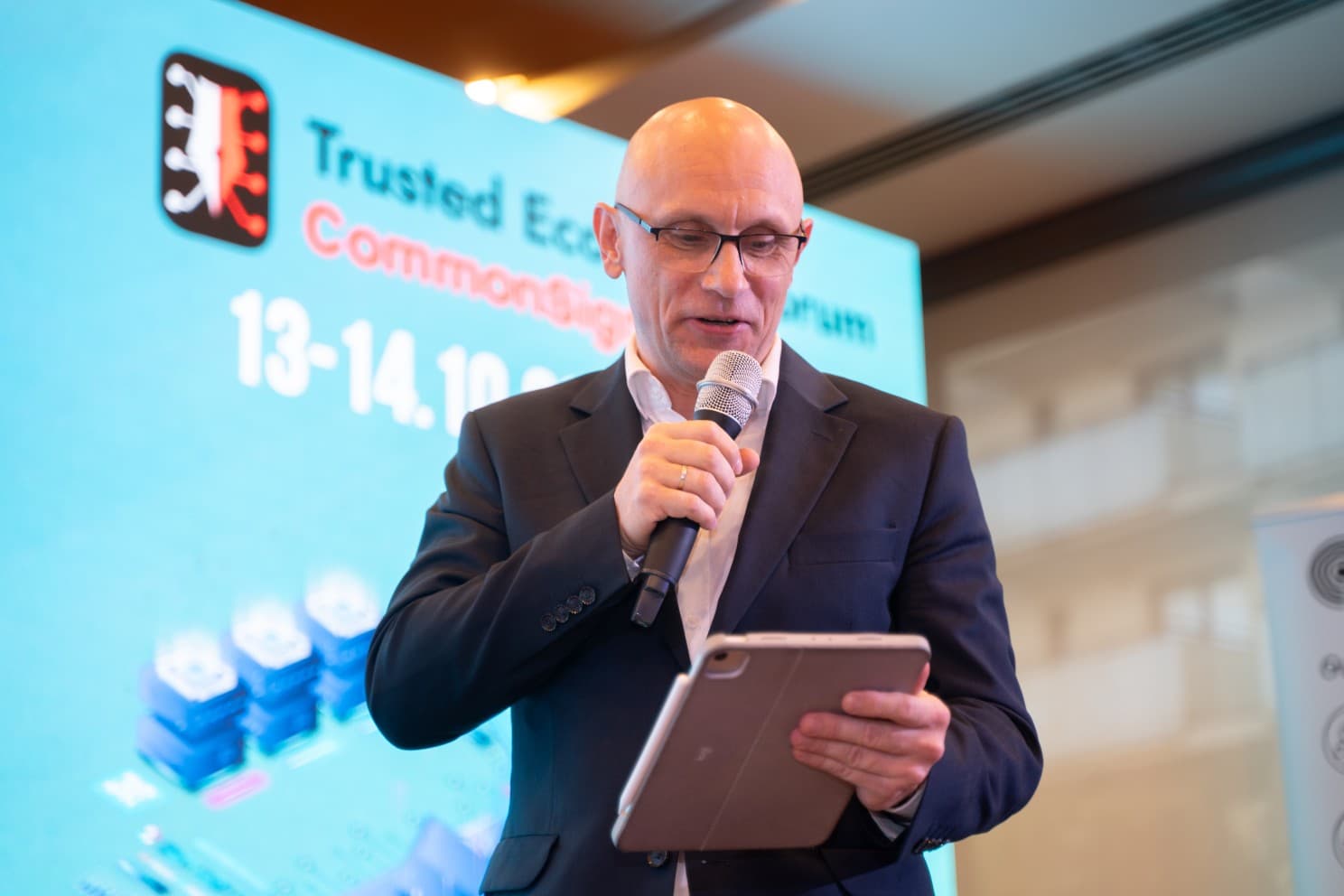
During the conference, Michał Tabor, Partner Obserwatorium.biz presented the Final Declaration, summarizing key insights, commitments, and directions for the development of trust services and digital identity in Europe.
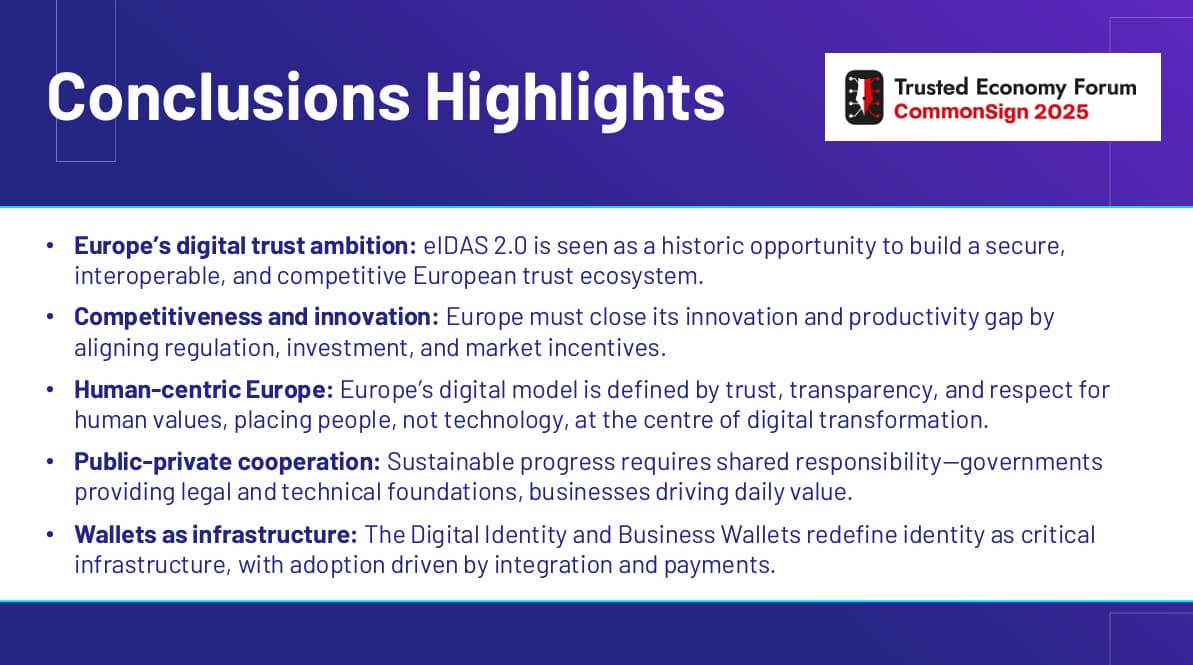
- Europe’s digital trust ambition:Standardization remains a cornerstone of Europe’s digital trust autonomy. The work of ETSI and CEN provides the institutional backbone for harmonized technical and procedural standards across the continent. Initiatives such as the European Signature Dialog, the Cloud Signature Consortium, and the Future Finance Poland Foundation further exemplify how open collaboration and shared frameworks can ensure interoperability and mutual recognition across borders.
Competitiveness and innovation:
Europe’s competitiveness gap remains visible: productivity and innovation scales lag behind those of global peers, and investors seek predictability, clarity, and a unified market. The State of the Art European Regulation is both a strength and a weakness. eIDAS, DORA, NIS2, CRA, PSD3, and other frameworks establish global standards; however, their overlap and complexity hinder innovation and increase “compliance taxes”.
Human-centric Europe:
Europe’s digital economy must compete on both innovation and market share. The continent’s strength lies in a human-centric approach that places security, and transparency at the heart of digital transformation. By aligning economic growth with human values, Europe can establish a leading digital ecosystem that not only fosters competitiveness but also safeguards the interests of its citizens and consumers. Regulation should remain value-driven, yet flexible enough to encourage investment to close the gap with overseas competitiors like the US or China. In addition to the above, significant investments in R&D and tax incentives should support the creation of innovative products. Building on trusted infrastructures, such as digital identity, secure payments, and interoperable data exchange, Europe can offer a distinct model where technology serves people. This balance between innovation, trust, and human rights defines Europe’s global leadership in the digital age.
Public-private cooperation:
Public-private cooperation emerged as another decisive success factor. Governments must provide the legal and technical foundation, while businesses create the everyday value that drives adoption. Trust service providers are a main pillar to the EU digital economy and their sustainability requires viable business models. Every layer of the trust chain, from issuers to verifiers, needs incentives and revenue flows to ensure continuity and innovation.
Wallets as infrastructure:
The Digital Identity Wallet and the European Business Wallet redefine identity as infrastructure, and not merely as an app. Their success will depend on integration with authentic sources, payments, daily-use services and the fast growth of the acceptance network in general. In some EU countries citizens interact with the government only about 1.6 times a year. In contrast, they use payment systems every day. Therefore, linking wallets with payment ecosystems will be a key for quick adoption. Local use cases should develop first, with cross-border expansion following naturally through business and regulatory demand.
Forum discussions highlighted the need for leadership and cross-functional expertise combining technology, law, business, and policy. Equally important are user experience and communication. Citizens must understand, value, and trust the tools they use. Achieving this requires consistent, human-centric design across European services, supported by education, accessibility, and awareness initiatives that build confidence and encourage everyday use.
The task ahead is to transform these assets into scalable, interoperable, and economically sustainable systems that connect public purpose with private innovation, making trust a defining element of Europe’s digital global competitiveness.
Looking Forward
Trusted Economy Forum continues to be a unique platform where innovation, regulation, and practical implementation intersect. Participants and partners alike left with new ideas, actionable recommendations, and valuable connections, positioning them at the forefront of digital transformation in their industries. We warmly encourage you to join us at Trusted Economy Forum events in 2026.
More information: https://trustedeconomyforum.com/
Publication date: 25.02.2026